Before You Buy a Single Share: Why the Order You Learn Investing Skills Determines Your Financial Future

Photo: investor studying financial documents at desk with blueprints, via thumbs.dreamstime.com
There is a persistent myth in American personal finance culture: that the single most important thing an aspiring investor can do is start as early as possible. Open a brokerage account, buy an index fund, and let time do the rest. The advice is not wrong, exactly—but it is dangerously incomplete.
What the "just start" crowd rarely acknowledges is that how you start matters far more than when you start. An investor who spends six months building a genuine understanding of risk, financial statements, and their own psychological tendencies before placing a single trade will, in most cases, significantly outperform one who opened a Robinhood account the same week they got their first paycheck. The difference is not luck or market timing. It is sequence.
The Construction Analogy That Changes Everything
Imagine hiring a contractor to build a house who skips the foundation and goes straight to the roof because they are excited to see the finished product. The structure might look impressive from a distance, but the first storm exposes every flaw. Investing without a proper foundation works the same way. Bull markets are extraordinarily forgiving—they make reckless strategies look like genius. Bear markets reveal the truth.
At The Stock Market Blueprint, we believe that building wealth requires the same disciplined sequencing you would apply to any serious construction project. You do not install the windows before you pour the concrete. Likewise, you do not begin selecting individual stocks before you understand what a balance sheet is telling you.
Level One: Understanding Risk Before You Understand Returns
The first skill every investor must internalize is not how to identify a winning stock—it is how to honestly assess their own relationship with risk. This is not a personality quiz. It is a rigorous, honest evaluation of three distinct factors:
Capacity for risk refers to your financial ability to absorb losses without derailing your life. A 28-year-old with a stable income, no dependents, and a three-year emergency fund has a very different capacity than a 55-year-old five years from retirement.
Tolerance for risk is psychological. How do you actually behave when your portfolio drops 20 percent? Not how you think you will behave—how you have behaved, or how you honestly expect to behave based on your emotional history with money.
Need for risk considers whether you even need to take significant risk to meet your goals. Many investors take on far more volatility than their objectives require, simply because they equate excitement with sophistication.
Investors who skip this foundational layer tend to discover their true risk profile in the worst possible circumstances—during a market downturn, when panic selling crystallizes losses that time would have otherwise healed.
Level Two: Reading the Language of Business
Once an investor understands their risk profile, the next essential skill is financial literacy at the company level. This does not mean becoming a CPA. It means developing enough fluency with financial statements to ask the right questions.
The income statement tells you whether a company is generating revenue and whether it is doing so profitably. The balance sheet reveals what a company owns, what it owes, and whether its financial structure is sustainable. The cash flow statement—arguably the most honest of the three—shows whether the business is actually generating real cash or relying on accounting adjustments to paint a flattering picture.
Consider two hypothetical investors. The first begins buying shares of a retail company because the stock has been rising and a popular financial podcast mentioned it favorably. The second spends two weeks analyzing the same company's financials and notices that despite rising revenue, free cash flow has been declining for three consecutive quarters and long-term debt has nearly doubled. The second investor passes. Six months later, the company issues a profit warning and the stock drops 40 percent.
Financial statement literacy is not glamorous. It will not go viral on social media. But it is one of the highest-return skills an investor can develop, precisely because so few retail investors bother to learn it.
Level Three: Confronting Your Own Psychological Biases
Behavioral finance research has consistently demonstrated that investors are their own worst enemies. Nobel Prize-winning work by Daniel Kahneman and Amos Tversky established that humans are not rational economic actors—we are emotional, pattern-seeking creatures who make predictable and costly mistakes under uncertainty.
The most damaging biases include:
- Confirmation bias: Seeking out information that supports a position you have already taken, while dismissing contradictory evidence.
- Recency bias: Assuming that whatever the market has done recently will continue indefinitely.
- Loss aversion: Feeling the pain of losses roughly twice as intensely as the pleasure of equivalent gains, which leads to holding losing positions too long and selling winners too early.
- Overconfidence: Particularly prevalent among investors who have experienced early success in a bull market and attribute market-driven gains to personal skill.
Learning to identify these tendencies in yourself—before you have real money on the line—allows you to build systems and rules that protect you from your own instincts. Checklists, investment policy statements, and pre-defined exit criteria are not bureaucratic nuisances. They are the structural reinforcements that keep your financial house standing when the psychological pressure to make irrational decisions is at its highest.
Level Four: Strategy Before Execution
Only after establishing a clear risk profile, developing financial literacy, and understanding your behavioral tendencies should you begin selecting an investment strategy. This is where the work of the first three levels pays dividends—literally.
Does your temperament and schedule align better with passive index investing, dividend growth investing, or a more active value-oriented approach? Each strategy has legitimate merit, but each also demands a specific psychological profile and level of ongoing engagement. A strategy that works brilliantly for a disciplined, analytically-minded investor with four hours per week to dedicate to research will fail spectacularly for someone who prefers a hands-off approach and tends toward impulsive decisions during periods of volatility.
Matching strategy to self is not a compromise. It is the intelligent application of self-knowledge to the most important financial decisions of your life.
The Counterintuitive Math of Patient Preparation
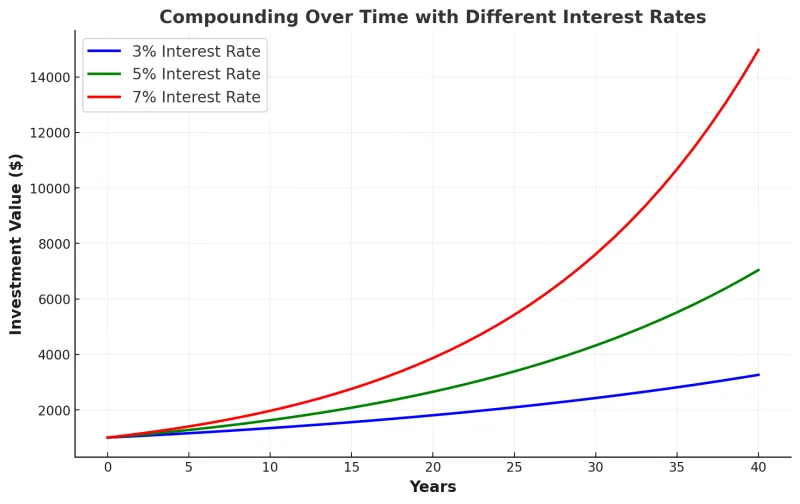
Critics of this sequenced approach often raise the opportunity cost argument: every month spent learning is a month of compounding lost. It is a reasonable concern, but it misunderstands how compounding actually works in practice for most retail investors.
The gains from compounding are only preserved if you do not interrupt them. An investor who spends six months building foundational skills and then invests consistently and intelligently for 30 years will outperform an investor who starts six months earlier but makes three or four major emotional mistakes—panic selling during a correction, chasing a speculative bubble, or concentrating too heavily in a position they did not fully understand—over that same period. The mathematics of avoiding large losses are just as powerful as the mathematics of generating large gains.
Starting early is valuable. Starting well is more valuable. Starting early and well is the blueprint.
A Framework for Deliberate Skill-Building
For investors who recognize they may have skipped steps, it is never too late to return to the foundation. A practical starting point:
- Complete a formal risk assessment using a structured framework, not a two-question online quiz.
- Read and analyze the financial statements of three companies you currently own or are considering—without looking at the stock price first.
- Keep an investment journal for 90 days, documenting every impulse to buy or sell and the emotion driving it.
- Write a one-page investment policy statement that defines your goals, strategy, and the specific conditions under which you will and will not act.
None of this is as immediately satisfying as placing a trade. But it is the work that separates investors who build lasting wealth from those who perpetually wonder why the market seems to work against them.
The blueprint was never about moving fast. It was always about building right.